THREE PILLARS FOR THE FUTURE OF THE HAMILTON COUNTY SHERIFF’S OFFICE
Hamilton County is growing, and our Sheriff’s Office must be prepared to grow and adapt with it. My plan is built around three pillars: Stronger Communities Through Partnership; Professional Public Safety & Effective Law Enforcement; and Accountability, Rehabilitation & Organizational Excellence.
These pillars are more than goals. They provide a framework for how I will lead, where I will focus resources, and how we will measure progress. Implementation will begin with listening to employees, residents, public-safety partners, local government, schools, businesses, and community organizations; evaluating current operations and resources; identifying gaps; establishing priorities; and measuring results.
PILLAR 1: STRONGER COMMUNITIES THROUGH PARTNERSHIP
THE GOAL
Create a Sheriff’s Office that is visible, accessible, connected to the community, and engaged with residents before an emergency occurs.
Community Outreach and Education:
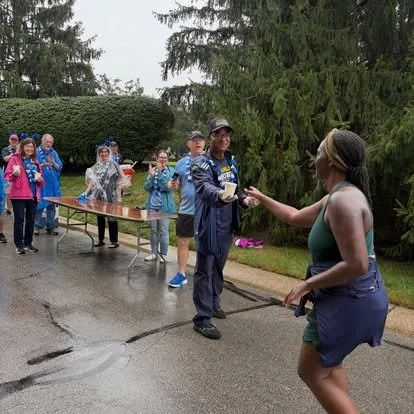
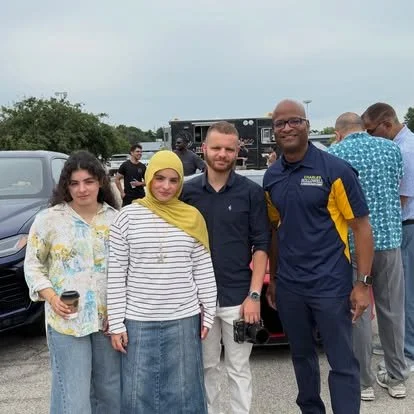
I will expand the Sheriff’s Office presence throughout Hamilton County through regular community meetings, educational programs, school visits, neighborhood engagement, business and civic events, and public-safety forums.
Education and prevention are important parts of public safety. The Sheriff’s Office should not only respond after something happens; we should give residents information that can help prevent crimes, injuries, and emergencies before they occur.
Educational programs will include:
Internet and Cyber Safety: Programs for children, parents, seniors, and businesses addressing online exploitation, social media safety, identity theft, cybercrime, phone and internet scams, fraud, and how to recognize and report suspicious online activity.
Drug and Fentanyl Awareness: Education for families and community organizations about fentanyl, illegal drugs, prevention, warning signs, and available community resources.
Water and Boating Safety: Education focused on boating, swimming, life jackets, responsible water recreation, and emergency preparedness around Geist Reservoir, Morse Reservoir, White River and other waterways.
E-Bike and Bicycle Safety: Age-appropriate education for young riders and families covering helmet use, visibility, safe riding practices, interactions with vehicles and pedestrians, and applicable traffic and safety rules.
Traffic and Vehicle Safety: Programs addressing distracted driving, speeding, seat-belt use, safe driving for young drivers, and other preventable roadway risks.
Home and Personal Safety: Practical information regarding home security, vehicle theft prevention, situational awareness, fraud prevention, and when and how to report suspicious activity.
-
Accountability begins with accessibility. As Sheriff, I will hold quarterly public open meetings so residents have regular opportunities to communicate directly with me and the Sheriff’s Office about public-safety concerns, community needs, and the performance of the office.
These meetings will provide residents with opportunities to raise concerns, ask questions, offer ideas, and hear updates about crime and traffic trends, community initiatives, jail operations, organizational priorities, and other matters affecting public safety.
They will also provide an important way for the Sheriff’s Office to hear directly from the communities we serve rather than assuming we already know what residents need.
Implementation:
Four public meetings will be scheduled each year and publicized in advance. When practical, meetings will be held in different areas of Hamilton County to make participation more accessible. Topics and concerns raised by residents will be documented, referred to the appropriate personnel for review or follow-up, and used to help identify emerging issues and community priorities.
At future meetings, the Sheriff’s Office will provide appropriate updates on significant issues previously raised so residents can see that their participation leads to follow-up. These meetings will help create an ongoing cycle of listening, collaboration, action, and accountability.
-
I will establish a Citizens on Patrol program that gives trained community volunteers an appropriate role in supporting public safety.
Participants can serve as additional eyes and ears in neighborhoods, parks, community events, and other public areas. Their role will be observation, visibility, education, and reporting—not performing the duties of sworn law-enforcement officers.
Implementation:
The Sheriff’s Office will develop clear eligibility requirements, training,
supervision, identification, operating procedures, and reporting protocols before
volunteers are deployed. The program will begin on a manageable scale and expand
based on participation, effectiveness, and community need.
-
Reserve deputies can supplement full-time staffing, increase visibility, assist at special events, and provide additional operational resources while helping responsibly manage personnel costs.
I will strengthen the Reserve Division by evaluating staffing and operational needs, establishing recruitment goals, ensuring reserves receive applicable department-wide training and appropriate equipment, and providing qualified merit supervision.
Implementation: I will begin with a staffing and operational assessment. Recruitment goals will then be established based on identified needs. Training compliance, equipment readiness, scheduling, and development will be overseen by qualified merit supervisors. I will also meet with Reserve Division members at least twice annually to hear their ideas and identify opportunities for improvement.
-
As Hamilton County grows, residents should not have to travel to one central location for every interaction with the Sheriff’s Office.
I will explore strategically located satellite offices throughout the county to improve deputy visibility, accessibility, and community connection.
Implementation: Rather than immediately constructing expensive new facilities, we will first identify opportunities to use existing county, municipal, or community facilities where practical. Locations will be evaluated based on population growth, service needs, geographic coverage, accessibility, cost, and opportunities for partnerships.
-
Public safety works best when agencies and communities communicate before a crisis occurs.
I will strengthen collaboration with residents, local police departments, fire and EMS agencies, schools, prosecutors, local governments, businesses, neighborhoods, civic organizations, nonprofits, and state and federal partners.
Implementation: I will hold regular meetings with public-safety and community stakeholders, encourage joint training and information sharing, identify opportunities to share resources, and establish regular countywide public-safety meetings where residents can communicate directly with the Sheriff’s Office.
PILLAR 2: PROFESSIONAL PUBLIC SAFETY & EFFECTIVE LAW ENFORCEMENT
THE GOAL
Provide proactive, professional, constitutional, and modern law enforcement that anticipates changing public-safety needs instead of simply reacting to them.
-
Hamilton County cannot assume that because it has historically been safe, it will remain safe without continued effort.
My administration will focus on both traditional crime and emerging threats, with particular attention to fentanyl, illegal drug trafficking, cybercrime, fraud, online exploitation, crimes against children, and offenses that cross jurisdictional boundaries.
Implementation: We will use intelligence sharing, data, specialized training, technology, coordinated investigations, and active participation in appropriate local, regional, state, and federal task forces. Crime trends will be regularly reviewed so personnel and resources can be directed where they are most needed.
-
The Sheriff is responsible for determining how Sheriff’s Office personnel and resources can most effectively serve Hamilton County.
I support ending the Sheriff’s Office’s voluntary 287(g) agreement with U.S. Immigration and Customs Enforcement (ICE) and redirecting the Sheriff’s Office resources associated with that program toward local public-safety priorities.
My position does not mean disregarding federal or state law. The Hamilton County Sheriff’s Office will continue to follow all applicable laws, honor lawful court orders, and fulfill legally required cooperation and notification obligations.
It means that I believe our local personnel and resources should be focused first on the public safety responsibilities entrusted to the Hamilton County Sheriff’s Office.
Implementation: I will review the personnel time, training, administrative responsibilities, equipment, and other Sheriff’s Office resources associated with participation in the voluntary 287(g) program and work through the appropriate process to end the agreement. Resources that become available will be evaluated for reassignment to local priorities such as patrol, investigations, illegal-drug enforcement, traffic safety, jail operations, training, community engagement, and other identified county needs.
-
Criminal methods change rapidly. Law enforcement must evolve with them. I will support responsible use of technology, including drones, crime analysis, intelligence systems, investigative technology, and other proven tools that improve officer safety, investigations, response, and efficiency.
Implementation: New technology will be evaluated based on operational need, effectiveness, cost, security, training requirements, constitutional considerations, and measurable value. Technology should solve a demonstrated problem, not simply be purchased because it is new.
-
Population growth means more vehicles, congestion, crashes, speeding, distracted driving, pedestrians, bicycles, and e-bikes sharing our roadways and trails. I will establish a focused Traffic Safety Unit to address high-crash locations, speeding, reckless and distracted driving, traffic complaints, and other roadway safety concerns.
E-bike safety will be addressed through both education and appropriate enforcement. As e-bikes become more common, particularly among young riders, families should have clear information about safe operation and applicable rules.
Implementation: Before automatically adding positions, we will evaluate whether existing personnel can be strategically reassigned to establish the unit. Crash data, traffic complaints, enforcement data, and community input will help determine where resources are deployed.
The Traffic Safety Unit will work with schools, parents, local police departments, transportation officials, and community partners on education and prevention while using targeted enforcement when necessary.
-
Protecting young people requires strong relationships among law enforcement, schools, parents, and community partners.
Implementation: The Sheriff’s Office will strengthen communication with schools and School Resource Officers, support age-appropriate safety education, provide information to parents regarding emerging threats, and coordinate with local agencies when threats or incidents cross jurisdictions.
Internet safety, e-bike safety, drug prevention, traffic safety, and other emerging issues affecting young people will be incorporated into these educational efforts.
-
Hamilton County’s reservoirs and waterways are tremendous community assets, but water recreation also presents public-safety responsibilities.
Water safety requires a combination of education, prevention, enforcement, emergency preparedness, and coordination among agencies.
Implementation: The Sheriff’s Office will work with fire/EMS, local law enforcement, emergency management, state agencies, reservoir communities, and other partners to strengthen water-safety education and coordinated emergency response. Educational efforts will address life-jacket use, boating safety, swimming safety, responsible operation of watercraft, emergency preparedness, and other preventable risks. We will also evaluate training, equipment, staffing, and interagency response capabilities associated with water emergencies.
-
Residents deserve consistent, professional, and compassionate responses to animal-related public-safety concerns throughout Hamilton County. I will work toward strengthening countywide Animal Control services and coordination.
Implementation: We will evaluate current service coverage, staffing, call volume, response procedures, jurisdictional responsibilities, training, equipment, and partnerships with municipalities and animal-welfare organizations. From that assessment, we will identify gaps and develop a sustainable countywide service model.
-
Major emergencies do not stop at city or township boundaries.
Implementation: I will strengthen joint training and emergency preparedness with police, fire, EMS, emergency management, schools, local governments, and state and federal partners. We will emphasize unified command, coordinated response, communication, and clearly defined roles before major incidents occur.

PILLAR 3: ACCOUNTABILITY, REHABILITATION & ORGANIZATIONAL EXCELLENCE
THE GOAL
Build a Sheriff’s Office that invests in its employees, protects constitutional rights, improves outcomes within the jail, operates transparently, and demonstrates responsible stewardship of taxpayer resources.
-
Our employees are our greatest resource. Recruiting qualified people is important, but retaining experienced employees is equally critical. I will create a workplace where employees feel valued, heard, supported, and able to grow professionally.
Implementation: We will evaluate recruiting and hiring practices, regularly compare compensation and benefits with comparable area agencies, expand leadership and career-development opportunities, recognize strong performance, and conduct employee stay surveys to understand why employees remain and what could improve their workplace experience.
Employee feedback will be actively sought because some of the best ideas for improving an organization come from the people doing the work every day.
-
Law enforcement and corrections careers place demands not only on employees but also on their families. I will make physical and mental wellness an organizational priority.
Implementation: My plan includes paid, on-duty fitness opportunities, designated fitness and wellness coordinators, access to mental-health and wellness resources, family check-ins and support, and partnerships with vendors to increase access to healthier food options. Wellness should be part of organizational culture not something addressed only after an employee reaches a crisis.
-
A jail must be secure, constitutional, professionally operated, and capable of addressing the needs of the people in its custody. I will strengthen mental-health services within the jail through screening, intervention, treatment, and continuity of care.
Implementation: We will evaluate intake screening procedures, access to qualified mental-health providers, crisis-intervention protocols, treatment availability, staff training, and connections to community providers upon release. The goal is safer jail operations and better continuity of care.
-
People leaving jail who have education, skills, employment opportunities, and community support have a stronger foundation for successful reentry.
Implementation: I will pursue partnerships with local businesses, colleges, vocational institutions, nonprofits, and community organizations to expand educational opportunities, vocational training, certifications, workforce readiness, and connections to employment and community resources.
Programs will be regularly evaluated to determine whether they are being used and whether they are producing meaningful results.
-
Protecting public safety and protecting constitutional rights are complementary responsibilities of professional law enforcement.
Policies, training, supervision, and accountability must reinforce lawful and respectful treatment of every person.
Implementation: We will regularly review policies and training, ensure employees understand legal and constitutional requirements, maintain appropriate complaint and review processes, and reinforce expectations through supervision and leadership.
-
Eligible individuals in custody should have clear procedures for exercising voting rights available to them under Indiana law.
Implementation: The Sheriff’s Office will work with appropriate election officials and legal counsel to establish clear procedures for eligible detainees to obtain necessary voting information and exercise their lawful voting rights while maintaining jail security and election integrity.
-
Every taxpayer dollar should support a legitimate public-safety or organizational need. My education in finance and business, project-management experience, and experience managing multimillion-dollar budgets will inform how I approach Sheriff’s Office resources.
Implementation: I will conduct regular operational and performance reviews to identify inefficiencies, duplication, outdated programs, and opportunities to improve service or reduce costs. Programs will be evaluated based on results. Contracts, vendors, equipment purchases, and capital expenditures will be reviewed for cost, quality, performance, security, reliability, and long-term value.
When programs are no longer effective, we should be willing to improve, consolidate, replace, or discontinue them and redirect resources toward higher priorities.
-
Residents should be able to understand what their Sheriff’s Office is doing, communicate directly with its leadership, and determine whether initiatives are producing results.
Implementation: We will establish measurable objectives for major initiatives and regularly review staffing, training, employee retention, community engagement, traffic and crime trends, jail programs, spending, and other key performance measures.
The quarterly public open meetings established under Pillar 1 will also serve as an important accountability mechanism. They will provide regular opportunities to report progress, discuss public concerns, hear directly from residents, explain major initiatives, and follow up on issues raised at previous meetings.
Where legally appropriate, results will also be communicated through reports and other accessible channels. Accountability should be ongoing—not something that occurs only at election time.
HOW THE THREE PILLARS WORK TOGETHER
These priorities are intentionally connected.
Partnership helps us understand community needs, prevent crime, educate residents, and build trust.
Professional law enforcement gives deputies the training, technology, intelligence, partnerships, and resources necessary to address crime and emerging threats effectively.
Organizational excellence and accountability ensure we recruit and retain excellent employees, operate the jail responsibly, protect constitutional rights, evaluate results, and use taxpayer dollars wisely.
The quarterly public open meetings will help connect all three pillars by giving residents a regular voice in public safety, providing the Sheriff’s Office with direct community feedback, and creating a public forum for collaboration, progress updates, and accountability.
Implementation
Implementation: will not mean launching every initiative on the first day. It means establishing priorities, assessing current operations, listening to employees and residents, identifying resources, developing measurable goals, and implementing initiatives responsibly.
Hamilton County is growing and changing. The Sheriff’s Office must be prepared to grow and adapt with it, not simply becoming larger and more expensive.
My goal is to have a Sheriff’s Office that is visible, accessible, professional, innovative, collaborative, fiscally responsible, and accountable to the people it serves.